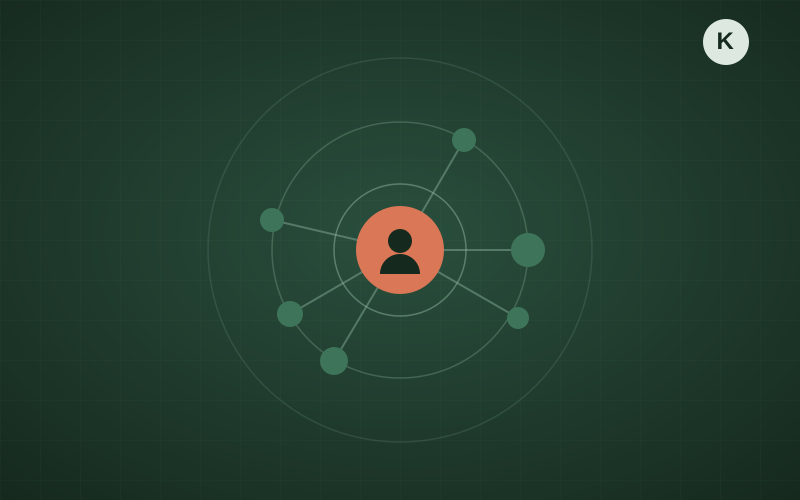
Ask most care systems what they're about and the honest answer is: shifts. They were built to schedule staff and count hours, and the person receiving support was added later, as a place to attach a few notes. It works, until the moment you need to see one person's whole story — and find it scattered across five screens that were never meant to talk to each other.
The person as the root
We made a different choice. In Karis, the supported individual is the root of the data model. The ISP, consent records, restrictions, case workers, health, and history all hang off the person — not off a roster, not off a program, not off a billing line.
That sounds like an implementation detail. It isn't. It changes what's possible.
Consent stops being a document
When the person is the root, consent can be a first-class concept rather than a PDF in a folder. A restriction recorded once is enforced everywhere the person appears. You don't have to remember it — the system does.
The question isn't "where did we file the consent?" It's "what does this person's consent allow, right now, on this screen?"
History that actually holds
Person-centered data means the history travels with the individual through every transition — programs change, staff change, but the record is continuous. When someone is discharged and returns two years later, their story is intact.
- One profile, not a profile per program.
- Consent and restrictions enforced across modules.
- A continuous history that survives transitions.
Scheduling lives here too — it just isn't the root
None of this means staff scheduling doesn't matter. It does, which is why Karis Care manages the workforce too: shifts, credentials, policies, training. The difference is where it sits. The schedule references the person; the person isn't a row on the schedule. Build it the other way around and you're back to a roster with notes attached.
Why it matters to you
Person-centered isn't a value statement on a wall. It's an architecture. When the person is at the center of the data, the software finally matches the way good practice already works — and the day-to-day stops fighting you.